

Cataracts
Cataracts can interfere with your vision and quality of life. Thankfully, cataract surgery has become a much easier, less invasive procedure than it was years ago with better outcomes for most patients. Our highly specialized cataract surgeons are recognized as leaders in their field. Our patients often experience life-changing improvement in vision.
What is a Cataract?
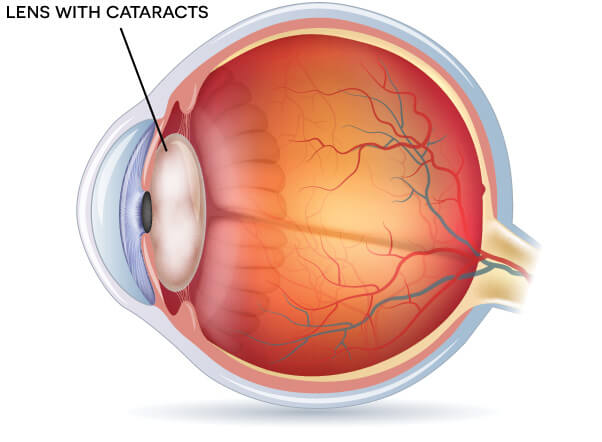
A cataract is a clouding of the eye’s natural lens that can interfere with your vision and is considered the most common cause of vision loss around the world. The rate at which a cataract progresses is highly variable. A cataract is not a tumor or growth. Vision can only be restored by surgical removal of the natural lens. More than three million cataract operations are performed each year in the United States.
If you are experiencing symptoms of a cataract or you are at risk for developing cataracts, call us to schedule a consultation today.

Symptoms & Diagnosis
As a cataract begins to develop, you may not notice any changes in your vision at first. People often notice glare as one of the first symptoms. Other common symptoms of cataracts:
- Glare while driving at night or in the bright sun
- Vision becomes cloudy, colors are dull
- Halos or lines of light around a point source such as headlights
- Increased light sensitivity
- You may need brighter lights to read, see faces or enjoy your hobbies
Cataracts are diagnosed during your dilated eye exam. Your OCB eye doctor will see clouding of your lens on physical examination. Testing will include checking visual acuity, refraction and sensitivity to glare. With glare testing, you will look at an eye chart and lights are introduced that simulate nighttime glare or sunlight.
Who is at Risk?
You may be at risk for developing cataracts at an earlier age if you:
- have diabetes
- have a family history of cataracts
- extensive exposure to sunlight
- smoke
- are obese
- have high blood pressure
- have had a previous eye injury or surgery
- have used steroid medications long term
Aging is the biggest risk factor for cataracts. In fact, cataracts are considered a natural part of the aging process. As we age, the lens inside the eye, which is made mostly of water and protein, becomes cloudy and hardens. The protein part of the lens may clump together, preventing light from coming through the lens causing cloudy vision. Aging changes vary from person to person. Some people may develop cataracts as early as 40, while others are much older. By the age of 80, most Americans either have a cataract or have had cataract surgery, according to the National Eye Institute.

Cataracts cannot be prevented. However, research shows that you may be able to slow down the progression of a cataract, by taking certain measures such as wearing sunglasses and a hat or visor to protect your eyes from the sun’s ultraviolet rays. Quitting smoking may also help.
How to Treat Cataracts
In the beginning stages, when symptoms are mild, treatment may involve a change of prescription for glasses. But once you find cataracts interfering with your day to day life, your OCB eye doctor will likely recommend that you consider cataract surgery, which is the only treatment for cataracts. There are no medications or eye drops that will cure cataracts.
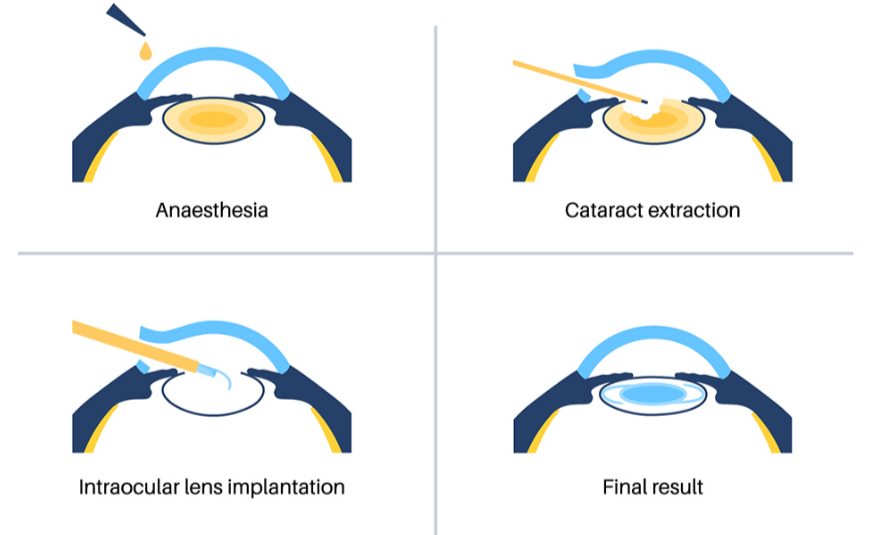
During cataract surgery, your surgeon will remove the eye’s cloudy natural lens and replace it with a clear artificial lens, known as an intraocular lens (IOL). In addition to restoring clearer vision, the procedure may also help correct other vision issues, depending on the type of IOL you choose. This is one of the most commonly performed procedures worldwide and is recognized for its safety and high success rate.
Continue to the next page to see the different IOL options OCB offers and how they can help you!
Risks of Cataract Surgery
An element of risk exists in any surgical procedure and complications can occur during surgery or in the healing phase after surgery, despite the best care.
Complications associated with cataract surgery can include blockage of blood vessels, retinal detachment, corneal swelling, macular swelling, bleeding and infection. A very rare complication is the possibility that the intraocular lens will require removal or repositioning. After cataract surgery, well over 90% of patients see significantly better. If patients who are known to have retinal disease are excluded from this group, the success rate is even higher, approaching 98%. Your doctor will discuss with you risks specific to your care prior to surgery.
At OCB we strive for excellence in every aspect of your care. We have highly experienced Board Certified cataract surgeons with complication and infection rates that are well below the national average.